Operational Excellence & Inclusive Leadership: Transforming Manufacturing Performance
Sustainable manufacturing success depends on the effective integration of technology, workforce planning, production intelligence, and inclusive leadership. In complex industrial environments, optimizing production efficiency requires accurate data synchronization, while building a resilient organization requires equal opportunities for talent development and career advancement.
These two initiatives focused on improving production performance through ERP-integrated workforce management and strengthening organizational leadership through progressive female empowerment.
High-SMV Manpower Allocation & ERP Integration
Driving Production Efficiency Through Data-Driven Workforce Planning
Manufacturing high-Standard Minute Value (SMV) products requires precise workforce allocation, synchronized production planning, and reliable payroll management. When HR systems operate independently of production data, organizations can face scheduling inefficiencies, payroll complexity, and difficulties aligning labor capacity with production targets.
This initiative focused on managing software-driven Human Resource Information System (HRIS) infrastructure, automating large-scale, multi-shift payroll processes, and integrating SAP ERP, GSD, and FastReact modules. By connecting workforce metrics with production scheduling and operational data, the initiative supported more accurate manpower planning and improved visibility into production requirements.
Key Business Outcomes
Integrated HRIS infrastructure with SAP ERP, GSD, and FastReact modules.
Automated complex payroll workflows across multiple production shifts.
Improved workforce allocation for high-SMV production requirements.
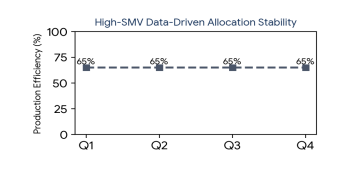
Sustained a 65% plant production efficiency benchmark for high-SMV output items through data-driven scheduling.
Strengthened coordination between HR, payroll, and production planning functions.
Strategic Impact
This initiative demonstrated the value of connecting workforce management systems with manufacturing intelligence. By synchronizing HR data, payroll processes, and production schedules, the organization established a more responsive operational framework capable of supporting complex production requirements while maintaining a consistent efficiency benchmark.
Progressive Gender Equity & Female Leadership Initiative
Empowering Female Talent to Lead Manufacturing Operations
Building a high-performance manufacturing organization requires identifying and developing talent across the entire workforce. In traditionally male-dominated operational environments, female professionals may encounter barriers to advancement into supervisory and managerial positions.
This initiative focused on breaking these barriers through a structured talent development, mentorship, and career progression program designed specifically for high-potential female professionals on the production floor. The framework aimed to create clearer advancement pathways, strengthen leadership capabilities, and expand female representation in critical operational roles.
By investing in professional development and leadership readiness, the organization enabled qualified female employees to progress into positions with greater responsibility, influence, and decision-making authority.
Key Business Outcomes
Established structured talent development and mentorship pathways for female professionals.
Strengthened opportunities for career progression within manufacturing operations.
Successfully placed female leaders in critical positions, including Supervisors, Floor In-Charges, and Production Managers.
Increased female representation in operational leadership and production management.
Advanced the corporation's position as a benchmark for female empowerment within the Export Processing Zone (EPZ) industry.
Strategic Impact
This initiative demonstrated that gender equity can be advanced through practical career development and leadership opportunities. By creating pathways for female professionals to move into key operational positions, the organization strengthened its leadership pipeline, broadened its talent base, and promoted a more inclusive manufacturing culture.
The initiative also highlighted the importance of moving beyond workforce diversity toward meaningful representation in supervisory and managerial decision-making.
The Bigger Picture: Smart Manufacturing Meets Inclusive Leadership
Together, these initiatives illustrate two complementary drivers of industrial competitiveness: technology-enabled operational efficiency and inclusive human capital development.
ERP and HRIS integration improves the organization's ability to align manpower with complex production schedules, while female leadership development ensures that talented professionals have opportunities to contribute at every level of the organization.
By combining data-driven workforce planning with progressive leadership development, manufacturing organizations can build operations that are more efficient, adaptable, and inclusive—creating a stronger foundation for sustainable growth and long-term business performance.